iGaming Churn Mitigation: How to Recover Players Before the Session Drops
A practical guide to detecting recoverable player friction and using live context, eligibility and decisioning to improve session progression.
17mins
·
October 26, 2026
A practical guide to detecting recoverable player friction and using live context, eligibility and decisioning to improve session progression.
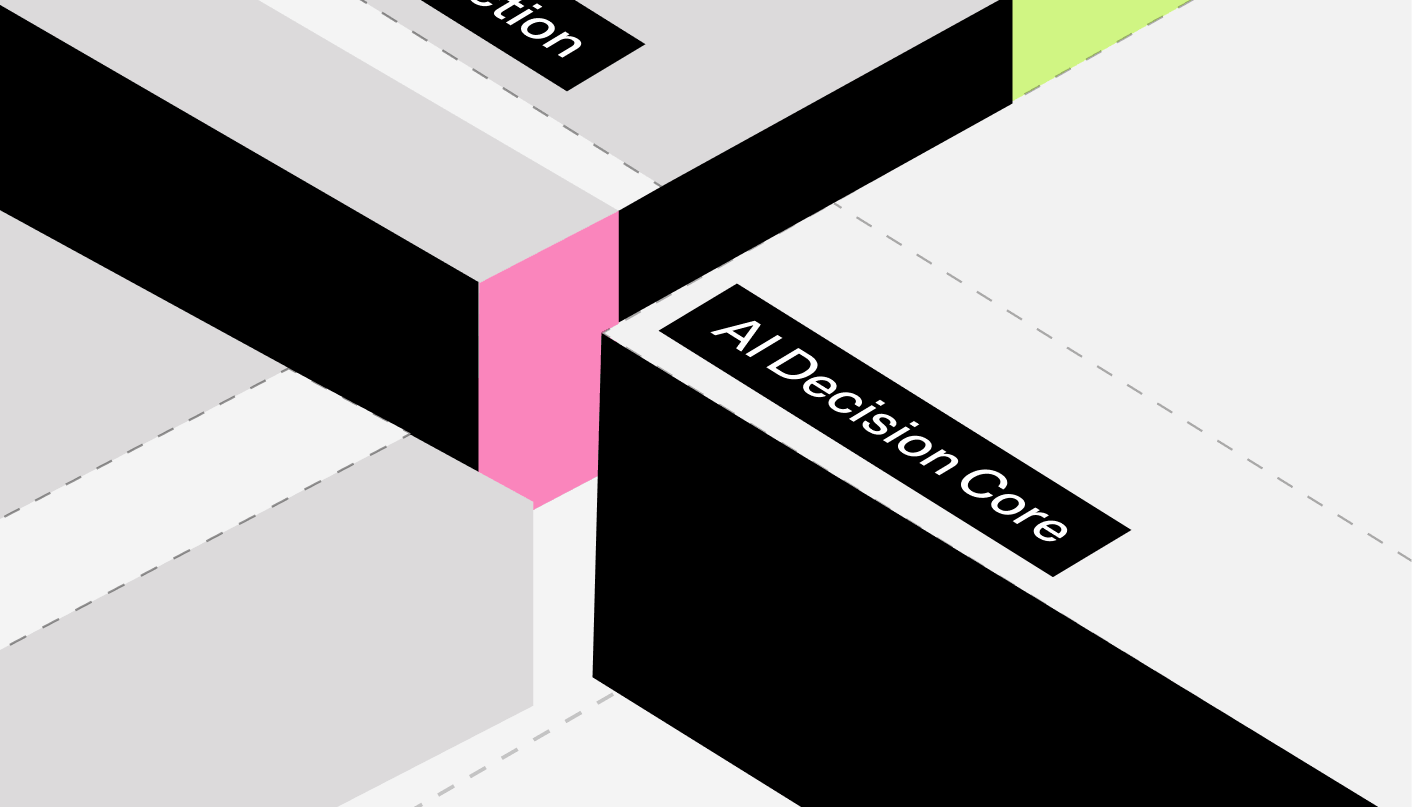
Churn prediction is useful because it helps operators identify players whose historical behaviour resembles previous disengagement patterns. Deposit frequency may decline, session cadence may change, activity may fall outside the player’s normal range, or a predictive model may assign a higher probability of future inactivity. Those signals can improve CRM prioritisation, lifecycle segmentation and reactivation planning.
But prediction does not answer the operational question that matters inside an active session: what should happen now? A player can carry a high churn score and still be progressing normally through the current journey. Another player can look healthy in the CRM while repeatedly returning to the lobby, failing a deposit, searching without finding a suitable game, reopening the same support issue or becoming stuck between registration and first meaningful play.
The second player may represent the more immediate retention opportunity because the problem is happening while the player is still present. In-session churn mitigation therefore starts from a different premise. The objective is not to classify every player who might eventually leave. It is to detect moments where progress appears to be weakening, understand whether there is a recoverable cause, and decide whether an intervention would actually improve the journey.
iGaming churn mitigation is the coordinated use of live behavioural signals, player context, decision logic, eligibility rules and player-facing execution to address recoverable friction before disengagement becomes established. It sits between pure prediction and later reactivation: the player is still active, but the current journey may be losing momentum.
For an operator, that requires more than a model score. The system needs to detect meaningful changes inside the session, assemble the context that explains those changes, distinguish normal behaviour from friction, filter recovery actions through consent, account state, jurisdiction and player-protection rules, and then choose an action that fits the immediate objective. The correct output may be a recommendation, guided payment recovery, a support route, a navigation step, a clarification question, an escalation—or no intervention at all.
Pega’s Next Best Action model reflects the broader decisioning principle behind this approach: real-time interaction data, customer context, potential actions and business rules are evaluated together instead of relying only on predefined campaign sequences. Pega: What is Next Best Action?
For iGaming, that principle needs an additional layer of control. Commercial recovery cannot operate independently from PAM state, payment status, support context, consent, market eligibility or responsible-gaming logic. Churn mitigation is therefore not simply prediction followed by messaging. It is a constrained decision problem.
The retention stack often uses the word “churn” for several different problems. A predictive model may estimate which players are more likely to disengage. CRM may use that score to prioritise a lifecycle campaign. Reactivation may target players after meaningful inactivity. Player-facing recovery operates closer to the current session and asks whether a specific moment can still be improved.
These layers can work together, but they should not be treated as interchangeable. Churn prediction answers who appears at risk. CRM retention answers which lifecycle journey should this player enter. Session recovery asks what is happening in the current experience and is there something useful to do about it. Player-facing AI provides one execution layer for that live decision when the response needs to happen inside the site or app.
Predictive churn models remain valuable when the operator needs to prioritise a large player population, identify changes in behaviour over time, support reactivation strategies or decide where CRM resources should be focused. They are particularly useful when no active session exists and the operator is working with historical patterns rather than an immediate player interaction.
The limitation appears when a score is treated as if it already contains the recovery decision. A high-risk player does not automatically need an offer. A low-risk player can still encounter severe friction. A generic “at-risk” classification also does not reveal whether the immediate cause is game discovery, payment failure, KYC, navigation, support intent, product availability or a protected player state.
Operators eventually face several recurring problems when prediction is connected directly to treatment:
The practical boundary is simple. Prediction helps identify where risk may exist. Live churn mitigation determines whether a recoverable problem exists now and what the system is allowed to do about it.
A useful churn-mitigation system should not jump directly from a behavioural signal to a message. It needs a decision sequence that can be inspected, governed and measured.
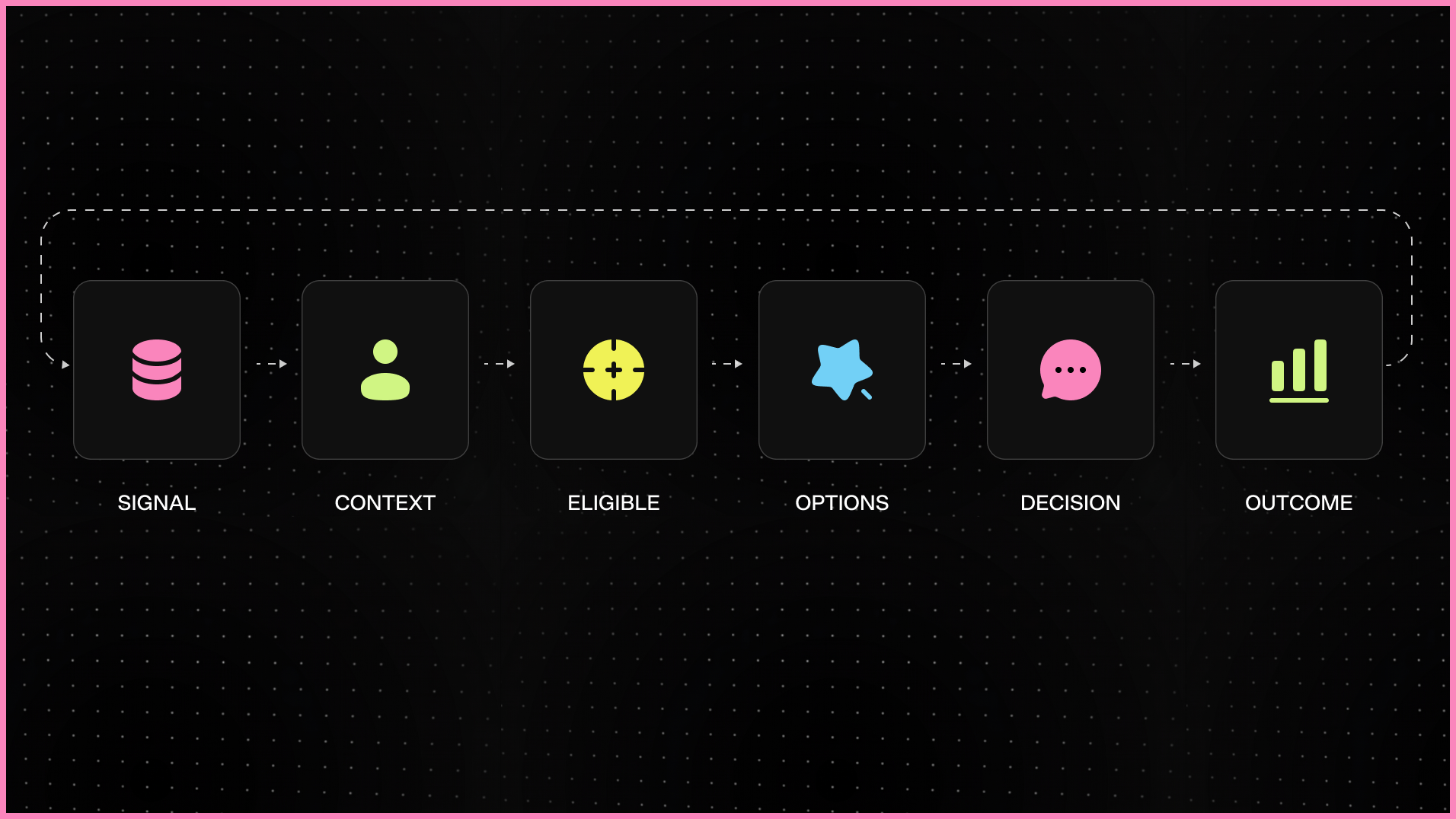
A drop signal is a change in behaviour that makes a retention decision worth considering. Examples include repeated lobby returns, several short game sessions, failed searches, a failed deposit, stalled onboarding, repeated support contact, a recommendation being ignored, or an unexpected break in the player’s normal session pattern.
The important point is that the signal does not contain its own explanation. A player who returns to the lobby three times may be struggling to find something relevant, but the same behaviour may simply reflect normal browsing. Several short game sessions may indicate poor fit, or they may be normal for that player. The purpose of the trigger is to open the decision window, not to declare that churn is occurring.
Amazon Personalize uses a related technical principle in recommendation systems: recent interaction events can update the system’s view of current interests as behaviour changes. The iGaming requirement is broader because those live signals may need to influence not only recommendations but also support, payment recovery, navigation or the decision to wait. AWS: Recording real-time events to influence recommendations.
Once a possible drop signal appears, the system needs to assemble the context that could explain it. Depending on integration depth, that may include current page, session depth, recent searches, game launches, payment state, KYC status, balance, account restrictions, previous recommendations, open support cases, lifecycle stage, market, language and recent recovery attempts.
This prevents one event sequence from producing one universal response. Three players can return to the lobby several times for completely different reasons. A new player may have no preference history and need discovery help. Another may have attempted to launch content that is unavailable in the market. A third may be moving between account pages because of an unresolved support problem. The surface behaviour is similar, but the relevant recovery paths are not.
The existing Slotsense journey-orchestration model uses the same operating principle. A trigger begins the process, while the current player state determines what that trigger means at the moment of interaction. Historical behaviour still matters, but live context explains what may be happening now.
Slotsense: Customer Journey Orchestration in iGaming
Slotsense: iGaming Personalization in 2026
The recovery objective does not override operator controls. Before the system ranks a recommendation, guidance step or promotional action, it should first remove anything that is not currently permitted.
Eligibility may depend on consent, market and jurisdiction, responsible-gaming state, exclusions, account restrictions, financial limits, KYC, payment availability, bonus rules, content availability and recent intervention frequency. These conditions should behave as hard constraints when required. An unavailable game should never enter the recommendation set. An ineligible offer should not compete in a ranking model. A protected player state should be able to suppress commercial treatment before optimisation begins.
The same architecture is used in the existing game-recommendation pillar: eligibility first, ranking second. Relevance does not make an unavailable or prohibited action acceptable.
Slotsense: Game Recommendation Engines for Online Casinos
A churn-mitigation system needs more than one type of response. If every detected problem leads to a bonus or generic retention message, the system is not resolving friction. It is simply attaching a commercial treatment to a behavioural signal.
A useful action library can contain several fundamentally different responses. The system might explain a known payment issue, show an eligible alternative payment method, offer a small set of games, ask one clarifying question, open a short preference quiz, route the player to the correct account step, surface an approved support answer, hand off to a human agent, suppress another campaign, or wait.
This matters because the cause determines the recovery mechanism. Payment friction should usually be addressed as payment friction. Support intent should not be disguised as a retention opportunity. Weak discovery confidence may justify a clarifying step rather than a confident recommendation. The action set should reflect the range of real player problems the operator is prepared to resolve.
The decision layer evaluates the eligible recovery options against the current state and the operator’s objective. Relevance matters, but so do confidence, expected value, recent intervention history and the possibility that another objective should take precedence.
This is where Next Best Action becomes part of churn mitigation. The system is not deciding which version of a retention message to send. It is choosing among different classes of action. One player may receive a short discovery flow. Another may see payment guidance. A third may be routed to support. A fourth may receive nothing because the signal is too ambiguous to justify interruption.
Slotsense: Next Best Action in iGaming
The quality of the decision depends partly on restraint. If confidence is weak, an aggressive guess can create more friction than the original problem. A useful AI layer should therefore be capable of concluding that the current journey is better left alone.
The final stage records what happened after the decision. The correct outcome depends on the problem being solved. For payment friction, the operator may measure successful deposit recovery. For game discovery, the relevant outcome may be a launch followed by a real wager inside a predefined window. For support friction, the useful outcome may be issue resolution or reduced repeat contact. For onboarding, it may be completion of the blocked step.
Interaction metrics remain useful as diagnostics, but they should not become the definition of retention success. Opening a recommendation, completing a quiz or clicking a recovery prompt shows that the interface was used. It does not prove that the player journey improved because of the intervention.
The Slotsense A/B-testing framework makes this distinction explicit. A controlled test should define the business outcome in advance, maintain a credible control group and analyse the effect of assignment rather than only the behaviour of players who chose to interact with the AI.
Slotsense: How to A/B Test Retention AI in iGaming
Trigger: The player has a positive balance and returns to the lobby several times without placing another wager.
Player context: The account is active, there is limited game history, no strong provider affinity is available and there is no open support case.
Objective: Determine whether the player is encountering discovery friction without interrupting normal exploration.
Possible actions: Present three contextual recommendations, open a short preference quiz, ask one clarifying question, or wait.
AI decision: Repeated lobby returns alone are not enough. If the behaviour appears together with failed searches, several very short launches or rejected recommendations, guided discovery becomes more plausible. If the player is actively browsing and there is no clear friction signal, the system keeps the current experience unchanged.
Outcome: The operator measures game launch, qualifying wager inside the defined window, quiz completion, dismissal, continued natural browsing or session end. The main test is whether the recovery policy improves progression compared with the standard journey, not whether the player clicked a recommendation.
Trigger: A deposit attempt fails while the player remains in the cashier.
Player context: The account has previous successful deposits and no unresolved account restriction is currently known.
Objective: Resolve the payment obstacle while the transaction context is still current.
Possible actions: Explain the known transaction status, surface an eligible alternative payment method, provide the permitted next step, open support, or wait if the payment state is still being resolved.
AI decision: The system uses available payment and account context before choosing the response. It does not interpret deposit_failed as an automatic reason to add a retention bonus because the immediate problem is payment friction, not lack of incentive.
Outcome: Successful payment recovery is the nearest business outcome. Support resolution, another failure and abandonment remain important secondary outcomes. A later wager can be measured downstream, but it should not hide whether the original problem was fixed.
Trigger: The player launches and exits several games within a short period.
Player context: The player has an established history, but the current behaviour differs from the normal session pattern.
Objective: Determine whether the player is struggling with relevance or simply exploring.
Possible actions: Offer an alternative game category, present a familiar provider shortcut, refresh preferences with a short question, show a contextual recommendation, or wait.
AI decision: If the available evidence suggests the current content is consistently mismatched, the system can offer a limited alternative. If preference confidence remains weak, the better decision is to avoid guessing and allow natural exploration to continue.
Outcome: Continued play, a real wager on a newly selected game, recommendation dismissal, continued browsing and session end all become useful outcome signals. This connects churn mitigation to recommendation logic without treating every game exit as a retention emergency.
Trigger: The player meets a normal session-recovery condition while a strong player-protection indicator is present.
Player context: Under normal commercial logic, the player might qualify for a retention action.
Objective: Apply the relevant protection and account controls before commercial optimisation.
Possible actions: Execute the appropriate protected interaction, suppress marketing, route to manual review where required, or take no commercial action.
AI decision: Promotional recovery options are removed before ranking. The system should not allow predicted churn value to compete directly against a hard player-protection requirement.
Outcome: Suppression, protected interaction and any required review are logged so teams can reconstruct what happened and why.
For Great Britain, UK Gambling Commission requirements provide one concrete example of this precedence model. Remote operators are expected to use multiple indicators to identify potential harm, act in a timely way and evaluate the effectiveness of customer interactions. Marketing and new bonus take-up must also be prevented in specified circumstances involving strong indicators of harm.
UKGC: Remote customer interaction guidance.
Great Britain is one concrete regulatory example, not a universal standard. Other markets have their own requirements and need local operator-side compliance validation.
Real-time retention should not be measured by how often the system manages to intervene. A mature recovery layer treats “wait” as a legitimate candidate when the signal is ambiguous, confidence is low, the player is already progressing normally, recent prompts were ignored, another objective has priority or no eligible action remains after suppression rules are applied.
This distinction matters because automated retention can easily become automated interruption. A player returns to the lobby, so the system shows a prompt. A game ends, so another message appears. The recommendation is dismissed, so the system tries again. Each individual rule may look reasonable, while the combined experience creates unnecessary pressure.
No action should still be recorded as a deliberate decision. no_action_low_confidence is analytically different from a failed delivery or missing event. That reason code helps CRM, Product and Data teams understand whether non-exposure was intentional and prevents experiments from incorrectly classifying restraint as a technical failure.
The goal is not to maximise the number of rescued sessions. It is to improve player progression where the system has enough evidence and permission to help.
The market uses churn prediction, retention automation, next-best-action, journey orchestration, recommendation, real-time decisioning and personalization as overlapping labels. Operators should ignore the label long enough to test which part of the retention problem the system actually controls.
Enterprise decisioning vendors increasingly describe retention as a combination of real-time context, action selection and feedback rather than a one-way scoring problem. Pega positions Next Best Action around continuously evaluating context and possible actions. AWS Personalize supports live event ingestion so recent behaviour can influence recommendations and actions. Adobe Journey Optimizer similarly emphasizes event-driven orchestration and same-session decisioning.
The direction matters because it changes the operator’s buying question. “Can the platform identify churn risk?” becomes “What can the platform decide after risk or friction is detected?” Prediction remains useful, but it becomes one input into a wider operating system that also needs live context, action eligibility, execution and measurement.
For iGaming teams, the second question is especially important because the right recovery response is often not promotional. A deposit problem may require payment guidance. Repeated lobby returns may require discovery help. An unresolved support case may need escalation. A player-protection state may require commercial suppression. The value of the system therefore depends less on the number of churn scores it produces and more on the quality of the decisions made after those signals appear.
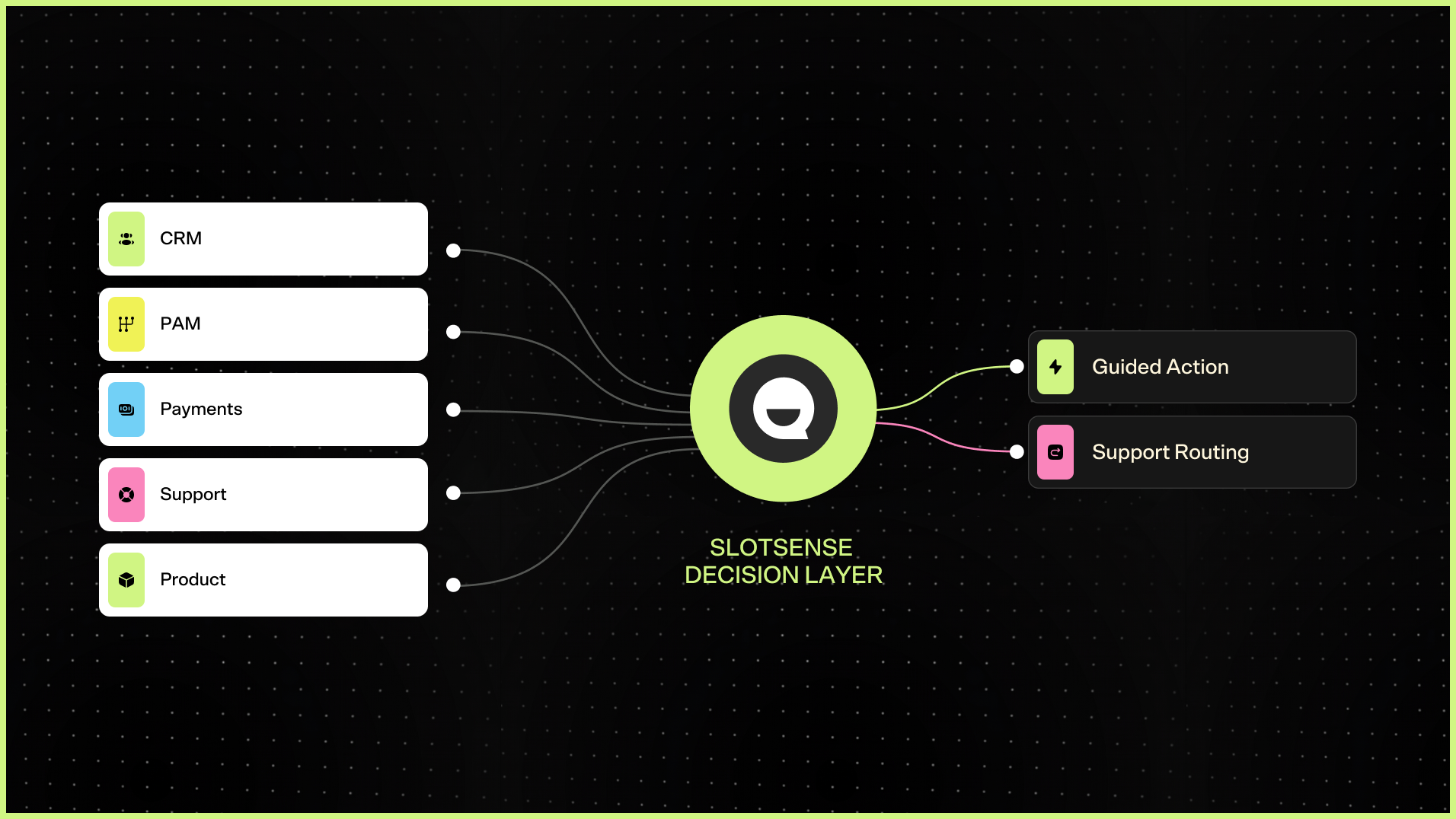
Slotsense is not a CRM replacement. CRM can continue to manage lifecycle segments, scheduled communication, reactivation and broader retention journeys. PAM can remain authoritative for player and account state. The casino product and aggregator can provide game and session events. Payment infrastructure remains authoritative for transaction state, while the support stack continues to own tickets, approved knowledge, queues and human-agent workflows.
Slotsense operates closer to the live player moment. It uses relevant signals from those systems to understand what is happening inside the active session, apply eligibility and guardrails, select a permitted next action and execute that action in a player-facing experience. The resulting outcome can then flow back into CRM and analytics instead of creating a separate customer system of record.
The Slotsense website describes the product as a player-facing AI layer that works with the existing product, CRM, support and data stack, with Retention AI using live triggers and player-state data to respond while the context is still relevant. Slotsense: Player-Facing AI for iGaming.
This boundary is also consistent with the existing customer journey orchestration framework. CRM remains central to campaigns and lifecycle logic. The player-facing layer handles the moment where the player is choosing, asking, hesitating or encountering friction.
Slotsense: Customer Journey Orchestration in iGaming.
In regulated iGaming, the “best” retention action cannot be defined only as the action with the highest predicted commercial value. Eligibility rules, account restrictions, market requirements and player-protection controls need precedence over commercial recovery. Where a rule is intended to veto an action, it should function as a hard constraint rather than one more weighted feature in the model.
The UK Gambling Commission’s remote customer-interaction framework provides one concrete example. Operators are expected to build an appropriate picture from available information, identify risk in real or near real time, act in a timely way and evaluate the effect of customer interactions. For a churn-mitigation architecture, that implies clear precedence: protection and mandatory account actions override commercial recovery; suppression and exclusion rules are hard constraints; low confidence should route to clarification, human review or no action rather than an aggressive guess; and the system should retain enough information to reconstruct why a decision occurred.
Teams should also measure negative outcomes. A recovery policy that improves a short-term conversion metric while materially increasing repeated prompts, support contact, incorrect routing or player-protection problems should not automatically be treated as successful.
Other jurisdictions have their own requirements. Great Britain is used here as one concrete example, not as a universal regulatory standard.
Churn mitigation produces many convenient product metrics: recommendation CTR, quiz starts, message replies, prompt views and completion rates. Those metrics are useful because they explain how players interact with the experience, but they do not establish whether the intervention created incremental retention value.
The primary metric should stay close to the problem being solved. A failed-deposit flow may use successful payment recovery as its primary outcome. A post-deposit discovery flow may measure the share of eligible assigned players who place a real wager within a predefined period. A support-recovery flow may focus on issue resolution and repeat-contact rate. GGR and NGR can be useful downstream commercial measures, but they should not automatically replace the proximal business outcome for every pilot.
A balanced evaluation should examine five dimensions. Business progression asks whether the intended next step occurred. Player experience looks for dismissals, repeated prompts, unresolved friction and additional support contacts. Decision quality shows which actions were selected, suppressed or intentionally skipped and why. Incremental impact compares the treatment policy with a credible control. Guardrails confirm that consent, suppression, protection and technical requirements continued to operate correctly.
The experimental read should remain intention-to-treat. If only players who opened a recommendation or completed a quiz are analysed, the treatment group becomes selected after randomisation and high-intent users can make the AI appear more effective than it was for the eligible population.
Slotsense: How to A/B Test Retention AI in iGaming.
Churn prediction and churn mitigation solve related but different problems. Prediction helps operators identify where future disengagement may be more likely. CRM uses that information for lifecycle prioritisation and reactivation. Live churn mitigation focuses on the shorter decision window where the player is still active and a recoverable source of friction may still exist.
Operators therefore need to separate three questions:
A high churn score does not answer the second or third question. Real-time decisioning adds the context, eligibility and action-selection layer. Player-facing execution closes the loop by turning that decision into guidance, discovery, support, escalation or deliberate restraint while the player is still present.
Slotsense works alongside CRM, PAM, product, payments, support and analytics to handle that live decision-and-execution layer rather than replacing the systems that already own the underlying player and lifecycle data.
Map your first in-session churn-recovery workflow with us →
iGaming churn mitigation is the use of live behavioural signals, player context, eligibility rules and decisioning to address recoverable friction before disengagement becomes established. Unlike churn prediction, it focuses on what should happen after a live problem or drop signal appears.
Churn prediction estimates the probability that a player may disengage. Churn mitigation evaluates whether a current problem is recoverable, determines which responses are eligible and selects the next action while the relevant context is still active.
Potential signals include repeated lobby returns, unusually short game sessions, failed searches, payment friction, stalled onboarding, repeated support contact and rejected recommendations. None of these signals proves churn on its own; current player and product context is needed to interpret them.
No. A churn-risk signal does not explain the cause of friction and does not make an offer automatically appropriate. The correct response may be support, guided payment recovery, game discovery, navigation, escalation, suppression or no intervention.
Next Best Action provides the action-selection mechanism inside a churn-mitigation flow. Once a possible problem is detected, the system can use live context and eligibility rules to choose among the permitted recovery actions.
No. CRM remains central for segmentation, lifecycle journeys, scheduled communication and reactivation. In-session churn mitigation handles short-lived player moments where the correct response may need to happen before the active session ends.
Yes. Waiting can be the correct decision when confidence is low, the player is progressing naturally, recent interventions have been ignored, another objective has priority or eligibility rules remove the available commercial actions.
The primary metric should reflect the business problem the intervention is trying to solve and should be evaluated against a credible control when causal impact matters. Engagement metrics such as CTR, recommendation opens and quiz completion are useful diagnostics but do not independently prove incremental value.
Content: